
The best ceiling fan for most Australian homes is a DC-motor model matched to the room’s size. It runs almost silently, costs a few cents a day, and moves enough air to keep you comfortable on a 35-degree afternoon without reaching for the air conditioner. That is the short answer. Which fan is right for your place comes down to ceiling height, whether you want a light, and how much salt air it has to cope with.
This guide is written from the other side of the ladder. As licensed Gold Coast electricians, we install and repair ceiling fans every week, so the picks below are judged on more than a product photo: how quiet they are, how they handle our coastal climate, how cleanly they go up. Retailer round-ups give you the specs; they can’t tell you which fan is still spinning after five years of sea breeze.
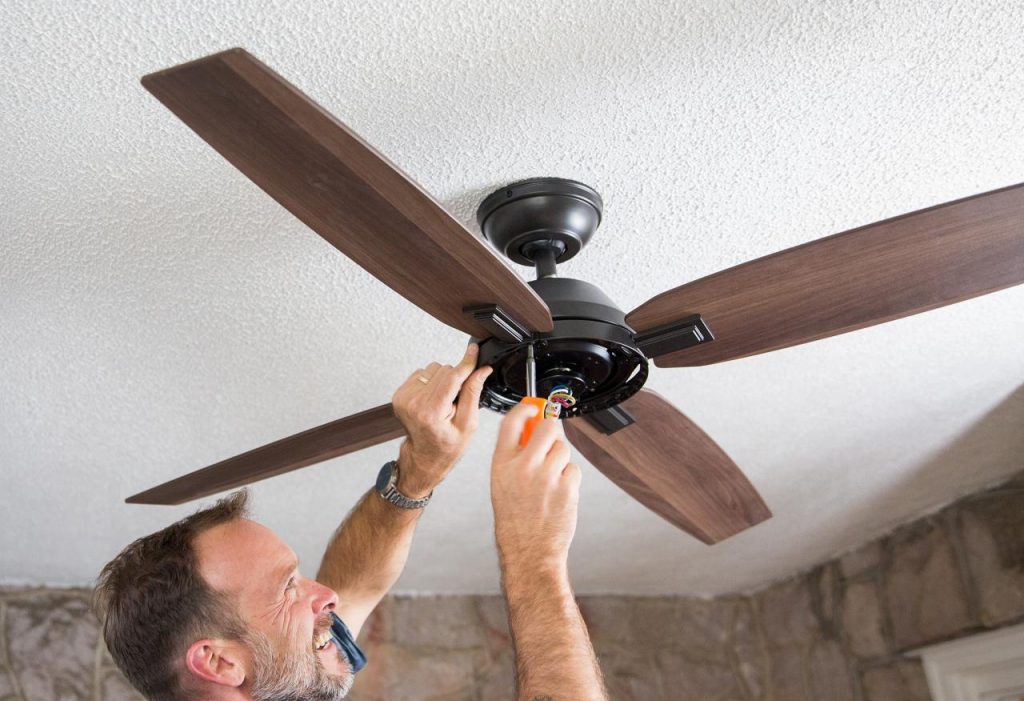
DC vs AC Ceiling Fans: Which Motor Is Better?
For bedrooms and main living areas, a DC motor wins. A DC ceiling fan uses up to 70 per cent less power than an AC motor model, runs far quieter, and usually gives you six speed settings instead of three, plus a reverse function for winter. An AC motor still makes sense when the budget is tight, or the fan runs only occasionally.
The difference is in the motor. A DC motor steps mains power down to low-voltage direct current and spins smoothly on very little energy, which is what makes a DC ceiling fan so energy efficient. It draws just 2 to 30 watts depending on speed, and the most efficient DC fans pull as little as 1.5 watts on their lowest setting. Leaving an energy-efficient DC fan on overnight barely registers on the power bill.
An AC motor is the heavier, older design: cheaper to buy and proven over decades in Australian homes, but an AC motor runs warmer, offers fewer speed settings, and hums more than a good DC motor. For a spare room or a rumpus used now and then, a quality AC motor fan is still hard to argue with.
How running costs compare to air conditioning
This is where fans earn their keep. On independent comparison figures, a low-speed 5.2-watt DC motor fan costs about 0.17 cents an hour, while a high-speed 58-watt AC motor fan costs around 1.9 cents. Run eight hours a day across a 90-day summer, and that is roughly $1.20 to $14 for the whole season.
A split-system air conditioner costs 35 to 45 cents an hour, a ducted system more again. Heating and cooling already make up close to 40 per cent of the average household energy bill, so running a fan on warm days is one of the easiest savings going. On the hottest days, run both and lift the thermostat a couple of degrees.
What Size Ceiling Fan Do I Need for My Room?
Match the blade span to the room size. As a rough rule, a room up to about 14 square metres suits a 1200mm (48 inch) fan, a bedroom or living room of 14 to 25 square metres suits a 1300 to 1400mm (52 to 56 inch) fan, and anything larger wants a 1500mm-plus blade span or two ceiling fans working together.
Getting the blade span right matters more than blade count. A bigger span moves more airflow at lower speed, which means better cooling with less noise. Undersize the fan for the room size and you end up running it flat out to feel anything, which defeats the point of a quiet DC motor.
Ceiling height, clearance and when you need a downrod
Blades should sit at least 2.1 metres above the floor, and ideally around 300mm below the ceiling for good airflow. On a standard 2.4-metre ceiling, the rod that ships with the fan is fine. On a raked or high ceiling, you need a longer downrod to drop the fan into the living zone, or the breeze never reaches you.
Open-plan living is the one place we suggest two smaller fans over a single large one. A kitchen, dining and lounge sharing a roof rarely cool evenly from one fan. Two well-placed 1300mm ceiling fans give more even airflow and let you run only the zone you are in.
Our Best Ceiling Fan Picks by Budget
These are the ceiling fans we see go up most often and get the fewest callbacks on. Prices move around, so treat the tiers as a guide.
Best budget ceiling fan under 200 dollars
A good budget fan is the honest entry point. Look for a reliable AC motor with a simple three-speed wall control and a reverse function on the motor, plus timber-look ABS blades that suit most rooms. Choose one rated for covered outdoor and coastal spots, and check the warranty, because some budget fans carry up to 8 years. For a spare bedroom or a rental, this tier is real value for money.
Best mid-range DC fans, 200 to 400 dollars
This is the sweet spot for most homes. A good mid-range DC fan packs features usually found on dearer models into a sensible price, comes in 48 and 52 inch sizes, and can be bought with or without an LED light kit so you can match it across rooms. The best of them pair a smooth DC motor with plenty of speed settings on the remote control, and so little vibration they make a genuinely whisper-quiet bedroom fan.
Best premium ceiling fan over 400 dollars
If silence and finish come first, the quietest DC ceiling fans at this level run almost silently, with a slim profile and an optional light. For large living areas, look for a 60-inch fan built for the Australian climate, with a 9-speed remote control, summer and winter modes, an energy-efficient DC motor, strong airflow, rust-proof materials rated for coastal use, and a multi-year warranty. These sit among the best-rated ceiling fans you can buy.
Quick tip: Buy the fan to suit the room size, not the other way around. A premium fan crammed into a too-small space underwhelms; a well-sized mid-range DC fan in the right spot feels brilliant.
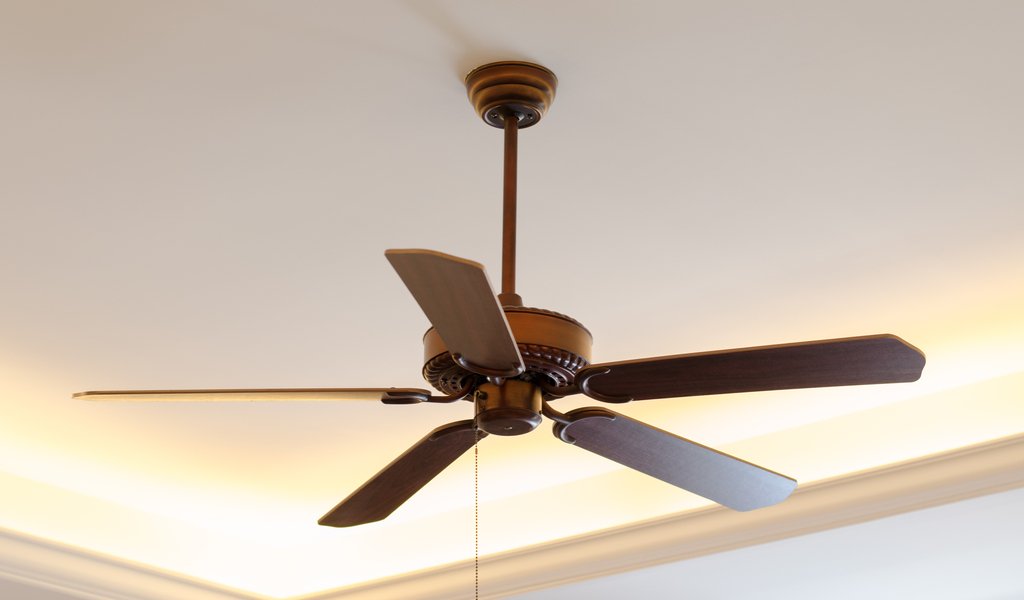
Best Ceiling Fans With Lights and Smart Control
A fan with a light kit is the tidiest way to light a bedroom: one ceiling point, one fitting, no separate downlights. Most modern ceiling fans now use a CCT LED light, which switches the colour between warm white for relaxing and cool white for getting ready, usually from the same remote control. The better light kits are dimmable too.
Does a fan light give off enough light? For a bedroom or study, yes: a single 18 to 20 watt LED light kit is plenty. For a large open living area, use the fan light for ambient lighting and keep a few downlights for task areas. One LED light will not fully light a 40 square metre room on its own.
Control is the other half of the story. Most fans now ship with a remote control as standard, and a simple remote control suits most people. If you would rather not chase a remote control, a wall control feels like a normal light switch and never goes missing. With a smart home, many fans now run through an app or voice assistant, so the bedroom fan comes on before you walk in. Rethinking your downlights too? Do both jobs at once.
Best Ceiling Fans for Coastal and Outdoor Areas
Salt air is brutal on cheap ceiling fans. A few streets back from the beach between Ormeau and Tweed Heads, you want a fan built to handle it, or you will be replacing it inside a couple of summers. For an exposed alfresco or poolside patio, look for an IP66 rating: dust-tight and sealed against water jets.
For exposed spots, we look for a fully sealed IP66 fan: vacuum-sealed, dust-tight and waterproof, often supplied with extension rods for higher patio ceilings. The best of them run an energy-efficient DC motor that pulls only about 19 watts on high while still pushing strong airflow, and they are backed by a multi-year warranty. These are true outdoor fans, not an indoor model pushed somewhere it was never made for.
For a covered patio or verandah protected from direct rain, a coastal-rated DC ceiling fan looks the part and does the job, ideally one that has been independently tested for the Australian climate. The word to find on the box is coastal rated; if it only says indoor, keep it indoors. Sorting out the whole entertaining area? Plan the fans and lighting together.
Installation, Safety and Running Costs
Here is the part the retailers skip. In Queensland, wiring a ceiling fan to a fixed point is licensed electrical work, not a legal DIY job, and a dodgy connection in your roof space is a real fire risk. A licensed electrician also issues a compliance certificate, which matters for your insurance and when you sell.
When we install a fan, we position it correctly, make sure it runs quietly and stays balanced, conceal any new wiring, and fit a wall control if you want one. We meet the relevant Australian standards, hand over a compliance certificate, and back the work with a workmanship guarantee. If your old fan needs to come down first, we remove it and quote the replacement upfront.
On running costs, the maths is simple. A DC ceiling fan costs single-digit dollars across a whole summer, and pairing it with the air conditioner lets you wind the thermostat back and cut the bigger bill. A fan is one of the cheapest comfort upgrades for a Gold Coast home, and a good one installed properly outlasts several cheap ceiling fans thrown up in a hurry.
Book a ceiling fan installation with Emos Electrical on the Gold Coast, or call Michael on 0424 473 630 for a free, no-obligation quote.
The Verdict: Which Ceiling Fan Should You Buy?
When clients ask us for the best ceiling fans, here is what we tell them. For the average bedroom or living room, buy a mid-range DC motor fan in the 200 to 400 dollar bracket, sized to the room, with a remote control and a CCT LED light kit if you want one fitting for both jobs. A well-sized mid-range DC fan is the safe pick. Step up to a premium ultra-quiet DC fan, or a 60-inch coastal-rated DC fan, if silence and a large space matter most. Anywhere near salt air, go coastal rated; for an exposed alfresco, insist on IP66. Then have a licensed electrician install it so it goes up safely, stays quiet, and the warranty stays valid.
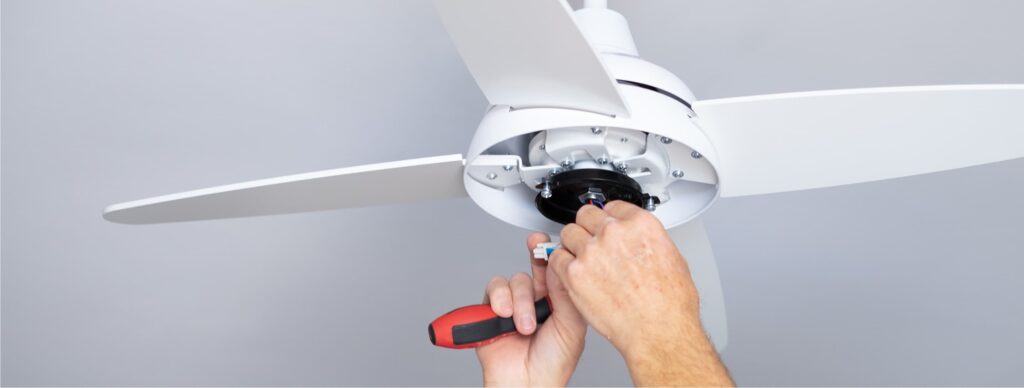
Frequently Asked Questions
Are DC or AC ceiling fans better?
For bedrooms and living areas, DC ceiling fans are the better choice. A DC motor uses up to 70 per cent less power, runs noticeably quieter, and gives you more speed settings plus a reverse function for winter. An AC motor is cheaper upfront and perfectly fine for rooms that only get used occasionally, like a spare room or laundry.
What size ceiling fan do I need for my room?
Match the blade span to the room size. A room up to about 14 square metres suits a 1200mm (48 inch) fan, a typical bedroom or living room suits a 1300 to 1400mm (52 to 56 inch) fan, and a large open space wants 1500mm-plus or two ceiling fans. A bigger blade span moves more airflow at lower speed, which keeps things quiet.
Do ceiling fans with lights give off enough light for a room?
For a bedroom or study, a single CCT LED light kit of around 18 to 20 watts lights the room comfortably. For a large open-plan living area, use the fan light for ambient light and keep a few downlights for task areas. One light kit will not fully light a very large room on its own, but it is ideal for most standard rooms.
Can I install a ceiling fan myself in Australia?
No. In Queensland, connecting a ceiling fan to fixed wiring is licensed electrical work and not a legal DIY job. A poor connection in the roof is a real fire risk, and only a licensed electrician can issue the compliance certificate your insurer may need. Emos Electrical can supply and install a fan, or simply wire in one you have already bought.
Which ceiling fans are best for coastal or outdoor areas?
For exposed outdoor and coastal spots, choose an IP66-rated fan, which is sealed against dust and water. For covered patios, a coastal-rated DC ceiling fan works well. Anywhere near salt air, check the box says coastal rated before you buy, and look for rust-proof materials and a DC motor.
How much does it cost to run a ceiling fan?
Very little. A low-speed DC fan can cost about 0.17 cents an hour, and even a high-speed AC fan only around 1.9 cents (based on independent comparison figures). Across an eight-hour day over summer, that is roughly one to fourteen dollars for the season, compared with 35 to 45 cents an hour for a split-system air conditioner.
Do you remove my old ceiling fan and supply the new one?
Yes. We remove and dispose of your old fan, and can either supply and install a new one or wire in a fan you bought yourself. Either way, you get an upfront quote that includes the ceiling fan installation cost, so there are no surprises. Phones are manned 24/7, and we can usually book you in for the next working day.
Ready to feel the difference a properly installed fan makes? Book a ceiling fan installation with Emos Electrical, or call Michael on 0424 473 630 for free advice on the best ceiling fan for your home.
About the Author
Michael, Licensed Electrician, QLD 67653, Master Electricians Australia member.
Michael is the licensed electrician behind Emos Electrical and has worked in the trade since 2001. He holds a Queensland electrical contractor’s licence (67653), the business is a member of Master Electricians Australia, and he has installed and repaired ceiling fans in homes right across the Gold Coast, from Ormeau to Tweed Heads. Every job follows a safety and testing checklist and comes with a workmanship guarantee and an electrical compliance certificate.